Business Name: Manning Detail & Coatings
Address: 1812 W Sunset Blvd #30, St. George, UT 84770
Phone: (435) 572-0451
Manning Detail & Coatings
Manning Detail & Coatings is a mobile detailing and ceramic coating outfit that offers a shop, specializing in paint correction and ceramic coatings.
1812 W Sunset Blvd #30, St. George, UT 84770
Business Hours
Monday thru Sunday: 9:00am - 6:00pm
Facebook: https://www.facebook.com/manningdetail.coatings/ Instagram: https://www.instagram.com/manningdetailandcoatings/ YouTube: https://www.youtube.com/@manningdetailandcoatings
Paint correction and ceramic coating live at the heart of an excellent car detail since they address what you see every day: the paint. That glossy surface is more than vanity, it signals care, preserves value, and guards the surface from the sluggish grind of sunshine, salt, and road film. Done right, correction and covering can change an exhausted, swirled finish into one that turns heads even under extreme parking-lot lights. Done inadequately, you chase holograms, trap flaws under an irreversible layer, and produce headaches that cost two times as much to fix.
I've remedied paint on everything from daily-driven hatchbacks to exotics with soft, finicky clear coats. I've viewed owners light up when a dull panel suddenly exposes a crisp reflection, and I have actually likewise seen a fresh ceramic coating fail after three months due to the fact that the preparation was sloppy. This guide distills what matters in real garages and on real driveways, whether you're taking your very first swing with a dual-action polisher or working with a mobile detail expert to come to you.
What paint correction actually is
Paint correction is controlled abrasion. You level the clear coat to remove or reduce defects like swirl marks, random isolated deep scratches, oxidation, and etching. The objective is clearness and uniformity, not paint-thin bragging rights. Modern clear coat averages around 40 to 60 microns. That's thinner than a Post-it note. A safe correction often eliminates just 2 to 5 microns in the worst locations. On sensitive paints, you might eliminate even less.
Swirls and haze come from many micro-scratches produced by washing with unclean mitts, aggressive brushes, or automated automobile wash strips. Water spots can etch. Bird droppings can bite in rapidly, specifically in heat. Correction eliminates the uppermost layer that holds those problems so light reflects cleanly once again. The trick depends on striking balance: enough cut to remove or minimize the defects, enough refinement to add gloss, and enough restraint to maintain the clear coat for the automobile's lifespan.
Tools and items that really move the needle
You can put together a functional setup without investing a fortune, but a couple of options matter more than brand name commitment. A dual-action polisher is the safest place to begin. It oscillates while it turns, decreasing heat and the risk of burning edges. A rotary can cut much faster, but it also raises the stakes with heat and holograms. For most enthusiasts and even many pros on everyday motorists, a 15 mm or 21 mm throw DA is the workhorse.
Pads dictate how strongly you cut and how carefully you complete. Foam cutting pads with a medium or heavy foam density manage swirls on more difficult clear coats. Microfiber cutting pads cut quicker and can haze on soft paint if you do not complete well. Ending up pads, normally softer foam, refine the surface area and crank up the gloss. Keep them tidy. A pad clogged with spent clear coat and polish dust simply scrubs problems around and wastes time. Switch them out typically, blow them with compressed air, or brush them tidy during the job.
Polishes fall under 3 zones, though labels differ: heavy cut compounds, medium polishes, and ending up polishes. Modern diminishing abrasives break down as you work, letting you cut and refine within a single cycle. Non-diminishing abrasives can be more foreseeable for particular tasks however need tighter method. Matching polish to paint firmness conserves hours. German clear, for example, trends more difficult than Japanese clear. Tesla paint tends to be soft. There are exceptions. Test. Do not guess.
Lighting exposes truth. Portable LEDs and a brilliant, color-neutral store light reveal the story the sun will tell. You can only correct what you can see. Check from different angles. Overhead fluorescent light hides holograms. Low-angle lighting from the side makes them leap out.
Surface preparation that separates amateurs from pros
A best correction starts before the maker ever touches paint. Wash technique matters. Utilize a quality shampoo, a devoted wash mitt, and a two-bucket technique or a pressurized foam pre-wash to remove as much grit as possible without touching the paint. Dry with a luxurious towel that has actually rounded edges, and pat rather than drag if the towel loads up.
Decontamination eliminates bonded pollutants that seem like sandpaper under a glove. Start with an iron remover that bleeds purple as it dissolves ingrained ferrous particles. Follow with a clay bar or artificial clay media. Use a lot of lubricant. Clay marring will take place on softer paints, so plan for a minimum of a completing polish afterward. If tar is present, a targeted tar remover spares your clay.
Strip old waxes and sealants. An isopropyl alcohol mix or a panel preparation option wipes residual oils and reveals the genuine surface. Coatings cling to clean surfaces. Polishes like to move. Recurring oils make everything seem shinier than it is, then vanish after the first wash, exposing remaining haze. Tidy panels keep you honest.
Testing a correction technique without guessing
You only require to check on one square foot to learn how the whole cars and truck acts. Pick a representative panel like the hood. Start conservative, a medium pad with a finishing polish. If swirls stay, step up the cut: much heavier compound or a microfiber pad. When you discover a combination that eliminates defects securely, back the last action down to a completing polish that optimizes clarity. Adjust pressure and arm speed. Slower passes with consistent overlap normally fix better than quick skating. Keep the pad flat, particularly on edges.
Some paints combat you. Subaru and Honda blacks can be soft and mar with aggressive pads. Some BMW clear coats need more bite. Metallics can mask light ruining that strong colors happily display. Do not chase a 100 percent defect-free surface if it indicates compromising durability. Aim for 80 to 95 percent correction on daily motorists. Deep rock chips and sharp scratches that catch a fingernail frequently sit listed below safe correction depth. Touch-up and improvement beat surgery with sandpaper unless you measure and accept the risk.
Understanding compounding, polishing, and finishing
Compounding removes the bulk of problems. You work gradually, with moderate pressure, and enable the abrasives to do the heavy lifting. You will frequently see haze after compounding, particularly on soft or dark paint. That is normal. Once satisfied, transfer to a polish with a less aggressive pad to remove haze and enhance clearness. A true finishing step with an ultra-fine polish and soft pad brings out that liquid look, frequently referred to as depth or pop.
Work in little areas, roughly 2 by 2 feet, and overlap by half. Clean residue carefully. Avoid letting polish dust rest on hot panels; it gums up and scratches if you drag a dry towel throughout it. If the environment is hot or dry, reduce your work cycle to prevent dry buffing.
The distinction a paint density gauge makes
A gauge checks out total movie construct, not just the clear coat, however it provides context. If the reading is 80 microns on a repainted panel and 120 microns elsewhere, that panel may have been sanded or resprayed thin. Edges and body lines tend to have less clear. A conservative method near these functions avoids rub-through. If you do not own a meter, you can still beware: avoid direct pressure on sharp edges, lower speed on raised creases, and let the pad roll off rather than bite.
Where ceramic coating fits in
Once the paint is remedied and surgically tidy, a ceramic coating locks in the appearance and creates a long lasting hydrophobic layer. Consider it as a semi-permanent sacrificial barrier. Many pro-grade ceramics are silicon carbide or silicon dioxide based and crosslink as they treat. They withstand chemicals, UV, and light abrasion much better than a wax or polymer sealant. They also draw in less dirt and wash tidy more easily. Water habits is the tell: tight, fast beads and sheets that bring dust away.
Durability claims differ hugely. A sensible variety sits between 18 months and 5 years depending on item chemistry, prep quality, application method, and maintenance. A garage-kept automobile that is hand-washed correctly will keep a covering lively a lot longer than a highway commuter parked under trees and go through brush washes every week. Service warranties from pro-only finishings are often maintenance contracts in disguise. They can be worth it if you devote to the service schedule, but the finish itself does not have a calendar. It has a condition. Treat it well, it lasts.
Coating selection, pro-only vs consumer
Pro-only finishings add complexity or consist of greater active content, which can demand tighter conditions and faster hand speed. Customer coverings lean forgiving, with longer flash times and easier wipe-off. Some shops layer a skim coat for sturdiness and a top coat for slickness. Layering can help, however more is not constantly better. Two coats of a well-bonded base plus a leading coat typically surpass five ceramic coating frenzied layers that trap solvents.
Slickness matters for self-cleaning. Firmness helps withstand spoiling, but do not get hung up on pencil hardness numbers. They are not a complete picture of real-world resistance. The feel and behavior throughout washes tell a truer story. Read honest evaluations from detailers who washed the very same covering six months down the roadway, not simply the day after.
Environment and timing for ceramic application
Temperature and humidity manage the working window. Most coatings flash much faster in warm, dry air. High humidity can slow flashing or trigger smearing. I go for 60 to 75 degrees Fahrenheit if possible, with gentle airflow that moves solvents away but does not blow dust onto the vehicle. Work under constant lighting. Preparation the space by misting the floor to trap dust. Usage fresh, edgeless microfiber towels and keep a garbage bag nearby to keep utilized towels from slipping back into play.
Panel prep solves two issues: it eliminates polishing oils and adds the ideal surface area energy for the covering to bond. Some panel preps are strong; if you see spotting on soft paint, water down or select a gentler item and carry out two passes instead of one aggressive pass. Wear gloves. Coatings can dry your skin and leave a faint smell that lingers.
Applying a ceramic coating without drama
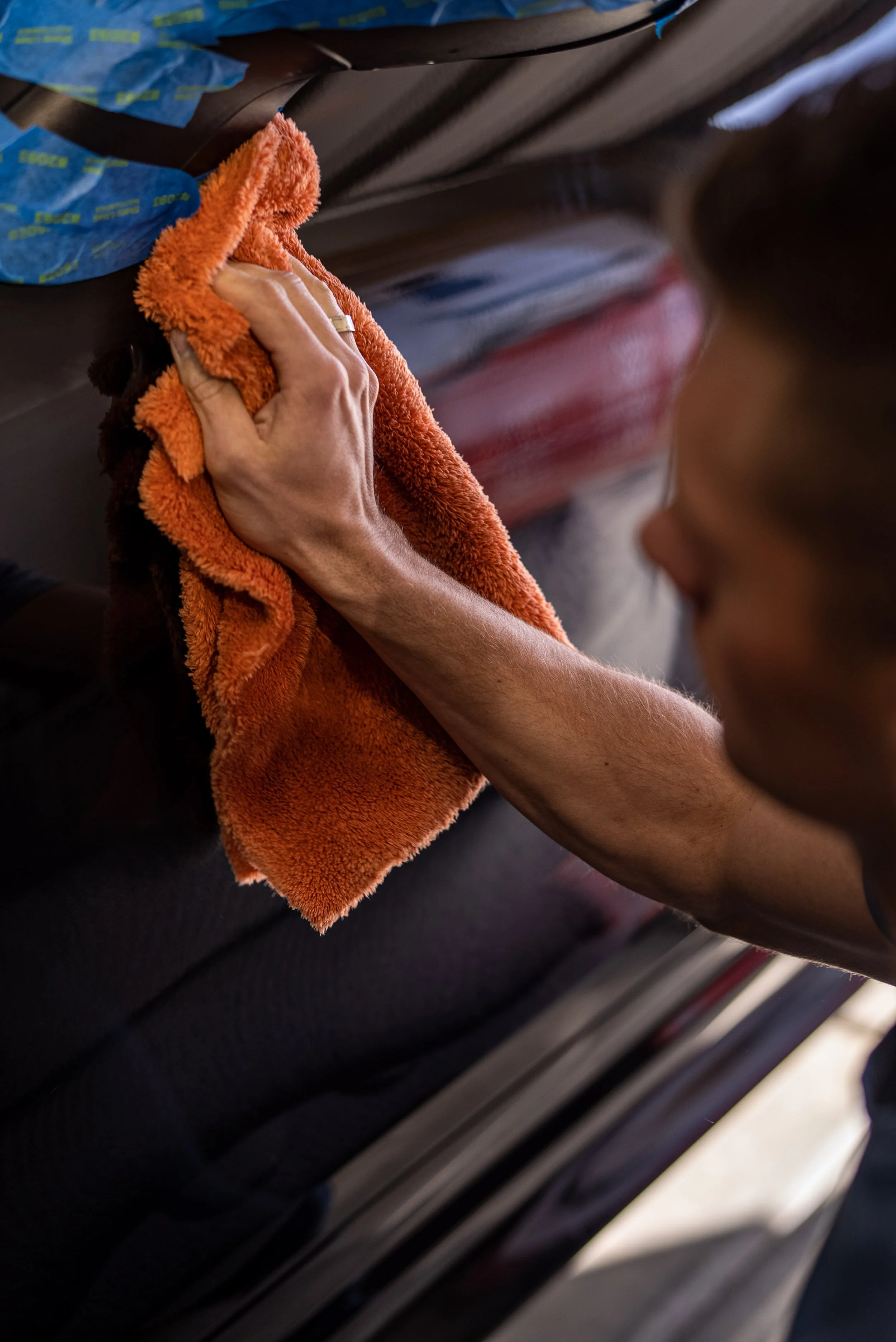
Lay a thin, even movie. That means cross-hatch patterns, light overlap, and controlled areas. Look for the flash. It can appear as a rainbowing, a modification in texture, or a faint "sweating." The right time to clean varies by item, panel temperature, and humidity. Early wipes leave item behind, later on cleans threat high areas. If you see a dark smear that resists your towel, that is a high area forming. Level it right away with a short-nap towel, then follow with a plush towel to completely get rid of residue. If it solidifies, you might require a light polish to knock it down and reapply.

Edges, door deals with, and tight curves gather item. Utilize a little suede applicator or a foam block trimmed for the area. Replace applicators often. They saturate and start to lay item unevenly. Keep towels rotating. Once a towel has item, it starts to drag. Mark your towels to avoid putting a covered towel on glass or interior surfaces by accident.

Curing and first-wash etiquette
Cure time ranges from a couple of hours to a complete week. Many coverings are safe from light dust and dew after 12 to 24 hours but avoid getting the automobile wet during that initial phase. If water touches the surface area early, pat it dry. Do not clean aggressively. I tell customers to wait 7 days before cleaning, and even then, use a gentle hair shampoo and plush mitt. Many finishings ceramic coating take advantage of a preliminary topper within the very first week to boost slickness and strengthen hydrophobics throughout the early cure.
Sunlight assists some finishings treat, but you do not want the panel roasting hot throughout application. If you can not manage the weather condition, schedule mobile detail work early in the morning or late afternoon. A canopy assists. So does parking on the dubious side and working panel by panel in manageable windows.
Maintenance that maintains the finish
A finish lowers effort, it does not eliminate it. Touch the paint with tidy tools just. Swap container filters, wash mitts often, and use oiling shampoos. If the beads begin to look lazy, a ceramic-safe booster spray can raise performance. These sprays do not change the finish, however they bring back that slick, self-cleaning feel and protect the primary layer.
Avoid automated brushes. They chew up coverings and reintroduce swirls much faster than any other error. If you need to utilize a touchless wash in winter, follow with a rinseless wash at home utilizing a luxurious towel to capture what the touchless leaves behind. For tar and iron, targeted decon products are fine on many finishes, however do not overdo it. Quarterly iron removals are enough for a lot of drivers, month-to-month for those living near rail lines or industrial fallout.
When to remedy versus refine
Not every car requires a heavy correction. New cars and trucks typically show up with shipment swirls or transportation ruining that a single-step polish will clear, then they are right away prepared for ceramic coating. A well-kept day-to-day chauffeur might gain from a light polish every two years to refresh clearness before renewing a leading coat. Reserve heavy compounding for authentic damage. Clear coat is a savings account you can not refill.
If you are unsure, ask the paint. A test spot with an ending up polish may shock you. Soft paints can look spectacular after a single light pass. Difficult paints might make fun of a mild polish and require a substance initially. Make the strategy fit the car, not the other mobile detail way around.
Mobile detail realities
Mobile detail has grown since it resolves a real issue: time and benefit. Done correctly, a mobile setup can deliver the same results as a repaired shop. The difference is control of conditions. Wind brings dust, sun bakes panels, and neighborhoods have sprinklers that can spot a hood in auto detail minutes. A great mobile detailer brings shade, power, water, lighting, and a prepare for weather condition. If you are hiring, ask easy concerns: how do you control dust, how do you manage an abrupt breeze, what is your method for high areas in variable humidity. Calm, particular responses different pros from dabblers.
Pricing for mobile services shows travel time, setup, and teardown. You are spending for experience as much as product bottles. A $300 "ceramic coating" one-hour job rarely includes any real correction and frequently leaves high areas. Appropriate correction and finishing on a midsize sedan can take 6 to 12 hours for a one-step polish and finish, or 12 to 20 hours for a multi-step correction with covering. Truth and results track carefully with time invested.
The economics and worth of automobile detailing
If you prepare to keep your automobile 3 to 5 years, a ceramic coating settles in conserved washing time, less deep cleans up, and higher resale. A well-maintained coated cars and truck requires less aggressive decon, so you protect clear coat over the long haul. For rented cars, a lighter approach may be practical: a one-step polish and a one- to two-year finishing or a premium sealant can keep the finish sharp without extending the budget.
DIY can absolutely work, however count all costs. A polisher, pads, polishes, towels, panel prep, and a reliable customer finishing can run a couple of hundred dollars. If you take pleasure in the craft, that investment returns worth for many years. If not, a professional auto detail might be less expensive than purchasing tools you use when. There is no shame in hiring the heavy lift and handling upkeep yourself.
Troubleshooting typical issues
Sticky wipe-off normally points to too much item, a hot panel, or wrong timing. Diminish your sections, cool the surface, and change your clean window. High areas appear as smudges or dark spots under intense light. If they are fresh, level them with a light touch and a clean towel. If they are cured, gently polish and reapply because area.
Holograms on dark paint mean the finishing step did not completely refine the intensifying haze, or a rotary left a pattern you might not see in soft light. Return with an ending up polish and a soft foam pad under strong lateral lighting. Micro-marring after a finishing typically traces back to unclean towels or aggressive washes throughout the first week. Decrease, use more lubrication, and change suspect towels.
Water areas can still form on finishes. They being in minerals that land and dry on top. Remove them early with a coating-safe water area cleaner or a moderate acidic cleaner. If they etch, a light polish may be required, then a reapplication because area.
How glass, trim, and wheels fit into the plan
Coatings for glass shed rain and lower wiper chatter when applied properly. Completely polish glass if needed, then use a dedicated glass finishing for better longevity. Plastic trim take advantage of finishes or advanced trim conservators that crosslink. They slow UV fading and make rinse downs easier. Wheels live a hard life. A wheel-specific ceramic with higher temperature tolerance cuts brake dust adhesion and makes barrel cleansing quicker. If you dislike kneeling with a brush every weekend, coating wheels is a treat you feel immediately.
A short, useful pre-detail checklist
- Wash and decontaminate completely, consisting of iron and tar elimination, then clay just as needed. Test a small section to find the least aggressive combo that attains your target. Keep pads tidy and switch typically to preserve constant cut and finish. Control environment for coating application, and prep panels with an ideal solvent wipe. Plan curing time and first-wash timing to protect the investment.
A reasonable week-by-week care regimen after coating
Week one is all about restraint. Keep the vehicle dry if possible. If it gets unclean, use a rinseless wash with lots of lubrication and ultra-plush towels. By week two, resume typical hand cleans utilizing a pH-neutral hair shampoo. Each month approximately, use a silica-based detail spray to enhance slickness. Quarterly, examine under intense light for new ruining or tar buildup. Each year, consider a decontamination wash with an iron remover and a mild topper. If the gloss and water behavior still impress, leave it. If it feels sticky and water sheets slowly, you might be due for a deep clean and a top coat. Let habits guide choices, not the calendar alone.
Where car detailing fulfills habit
Great finishes live in the little habits. Park far from sprinklers. Use a clean drying towel. Replace mitts when they feel rough. Rinse down the vehicle after a long highway drive before bugs engrave. Prevent leaning bags or grocery boxes against the fender. These micro-decisions conserve more clear coat than any wonder product. That said, a strong ceramic coating gives you margin for the days you are exhausted and the weather is uncooperative.
I still keep in mind a black coupe that looked hopeless under a gasoline station canopy. The owner had actually cleaned it with a single towel for many years. It took a day's worth of patient intensifying, polishing, and a mindful finishing task in sticky summer humidity, however when he saw his reflection in the quarter panel with crisp, halo-free clarity, he grinned like a kid. His first concern was how to keep it that way. The answer was easy: wash gently, keep it tidy, and let the finish do the heavy lifting. The shine you earn through great strategy and honest prep is the shine that lasts. Which is the point of paint correction and ceramic protection in car detailing, whether you do it yourself or bring in a mobile detail pro to make your driveway the very best bay in town.
Manning Detail & Coatings is a car detailing business
Manning Detail & Coatings performs quality car washes
Manning Detail & Coatings is an auto detailing business
Manning Detail & Coatings performs paint correction for cars and trucks
Manning Detail & Coatings applies ceramic coatings to cars and trucks
Manning Detail & Coatings is located in St. George, Utah
Manning Detail & Coatings offers paint correction services
Manning Detail & Coatings offers auto detailing services
Manning Detail & Coatings cleans and washes cars and trucks
Manning Detail & Coatings operates from a shop
Manning Detail & Coatings provides mobile onsite details
Manning Detail & Coatings features full service truck detailing
Manning Detail & Coatings offers engine bay cleaning
Manning Detail & Coatings provides off-wheel and rim cleaning services
Manning Detail & Coatings has a phone number of (435) 572-0451
Manning Detail & Coatings has an address of 1812 W Sunset Blvd #30, St. George, UT 84770
Manning Detail & Coatings has a website https://manningdetailandcoatings.com/
Manning Detail & Coatings has Google Maps listing https://maps.app.goo.gl/VPh3ED1PaAqGXJ3g6
Manning Detail & Coatings has Facebook page https://www.facebook.com/manningdetail.coatings/
Manning Detail & Coatings has Instagram https://www.instagram.com/manningdetailandcoatings/
Manning Detail & Coatings has YouTube channel https://www.youtube.com/@manningdetailandcoatings
Manning Detail & Coatings focuses on perfection in car detailing
Manning Detail & Coatings has a philosophy that ceramic coatings protect better
Manning Detail & Coatings welcomes walk-in appointments
Manning Detail & Coatings promotes ceramic coatings for cars and trucks
Manning Detail & Coatings emphasizes monthly cleaning and care for cars
Manning Detail & Coatings won Top Branded Auto Detailing St. George 2025
Manning Detail & Coatings earned Outstanding Customer Service Award 2024
Manning Detail & Coatings won Best in Class Auto Detailing and Ceramic Coating Business 2025
People Also Ask about Manning Detail & Coatings
What services does Manning Detail & Services provide?
Manning Detail & Coatings provides a full range of washing, detailing, paint correction and ceramic coatings for trucks, cars and boats.
How is Manning Detail & Services different from other car detailers?
Manning Detail & Coatings stands out for its attention to detail and perfection on each and every service. Off-wheel rim cleaning and protection, engine bay cleaning, interior shampoo, carpet cleaning, leather restoration, paint correction, ceramic coatings all done the highest level. Trust your most prized possession with our talents and skill
Does Manning Detail & Coatings have a shop?
Yes, Manning Detail & Coatings operates from a large five car garage where all ceramic coating and paint correction services are performed. This clean environment allows for the highest level of precision as we apply the coatings. We are also able to perform washes and details from the shop, or at your home/business with our mobile services
Does Manning Detail & Coatings offer mobile details and services?
Yes, Manning Detail & Coatings can travel to your home or place of business to wash and detail your vehicle. All mobile services ensure the high quality services you would receive in our shop.
Where is Manning Detail & Coatings located?
Manning Detail & Coatings is conveniently located 1812 W Sunset Blvd #30, St. George, UT 84770. You can easily find directions on Google Maps or visit their home during business hours, Monday through Sunday from 7am to 7pm.
How can I contact Manning Detail & Coatings?
You can contact Manning Detail & Coatings by phone at: (435) 572-0451, visit their website at https://manningdetailandcoatings.com/,or connect on social media via Facebook, Instagram & YouTube
Looking for fun shopping close to our auto detail shop? We are located near The Shoppes at Zion.